Deutsch
 Français
 Nederlands

ORIGIN · PRODUCTION · USE
What is verjus?
Pressed from unripe grapes, never fermented, mildly sour: what verjus is, how it is made and what you can use it for.
ORIGIN · PRODUCTION · USE
Pressed from unripe grapes, never fermented, mildly sour: what verjus is, how it is made and what you can use it for.
In the Middle Ages, verjus was the most important souring agent of fine cuisine in Europe. Today it is appreciated by top chefs, bartenders and everyone who enjoys food mindfully.
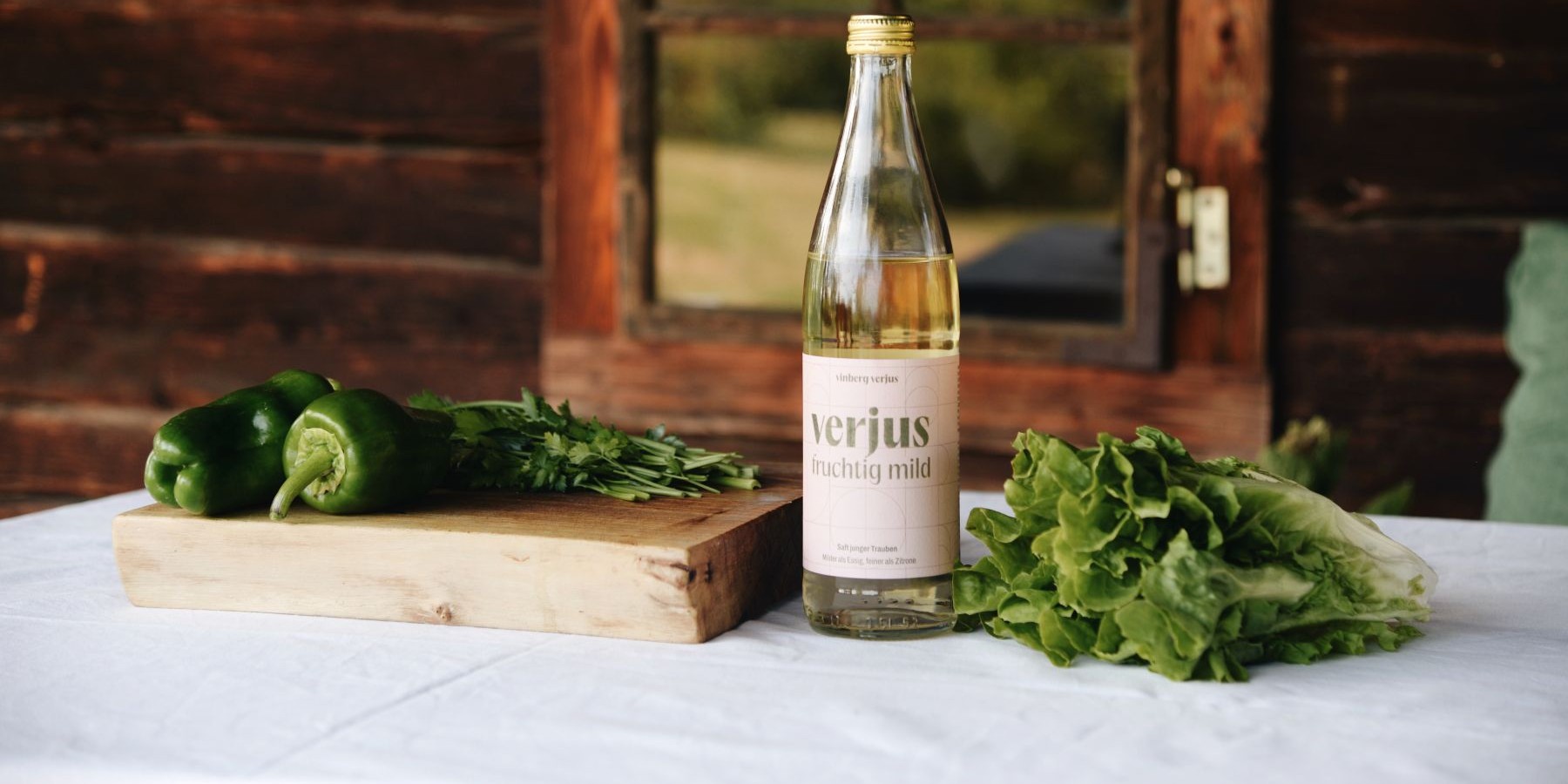
The name comes from Middle French: “vert jus” means green juice and refers to the green, unripe grapes it is made from. Its acidity is finer than lemon and milder than vinegar. That makes it right for dressings and sauces, baking and pickling, cocktails and refreshing drinks.
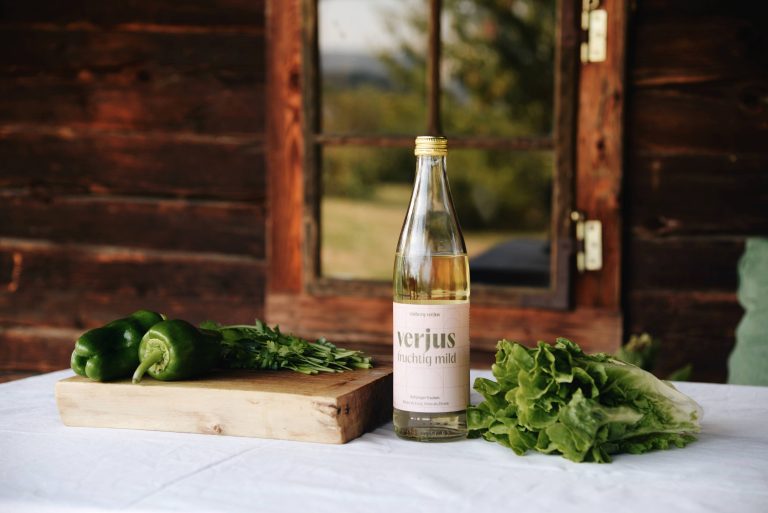
Finely and evenly sour, with a subtle aroma of green fruit.
On the finish, verjus is slightly astringent, much like wine. The acidity comes from the grape itself, from tartaric and malic acid. Depending on the harvest date, the taste ranges from zesty and sour to mild and fruity. Neat, verjus is very sour, so use it like a cordial: diluted as a spritzer or as the acid in dressings and sauces.
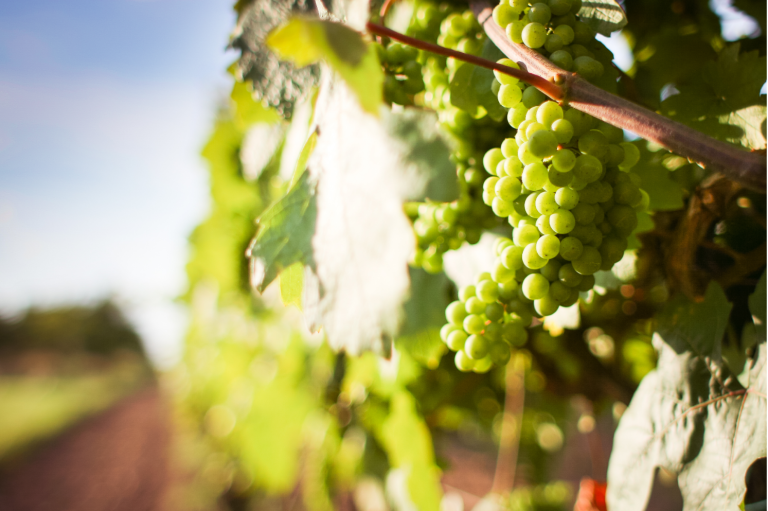
The green grapes are picked between the end of July and mid-August. Because young grapes contain little juice, you need about three times as many as for wine. Before picking, we observe sufficient waiting periods after crop protection.
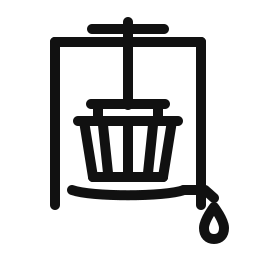
The hard grapes are gently pressed and the juice clarified and filtered or processed naturally cloudy. It is then pasteurised so that it keeps, and it is never fermented.
Still hot, the verjus goes into bottles or bulk containers and is sealed airtight. Unopened, it keeps for years; once opened, about 2 months in the fridge.
Its fine acidity supports the flavours of other ingredients instead of masking them: for pickling, in dressings or in goulash.

More delicate and less intense than lemon. Popular in cocktails, mocktails and baking, for creams, ice cream and glazes.

Acidity and a slightly tart astringency give alcohol-free drinks the freshness and depth that are often missing without alcohol.

Every batch of Vinberg Verjus is lab-tested low in histamine. It is also gluten-free, vegan and alcohol-free. Because it is never fermented, it skips the step in which biogenic amines such as histamine can form.

Depending on the variety, 2.0 to 7.8 g of sugar per 100 ml, all from the grape. Because verjus is used sparingly, only a little of it ends up in the dish.

Juice of unripe grapes and a little ascorbic acid to keep the colour stable. No preservatives.

incl. VAT

incl. VAT
incl. VAT
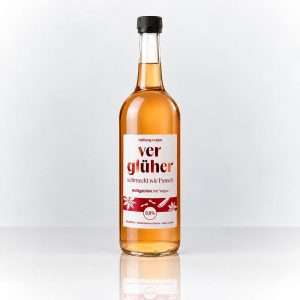
incl. VAT
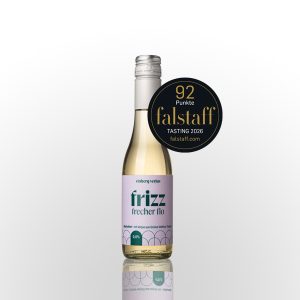
incl. VAT

incl. VAT

incl. VAT
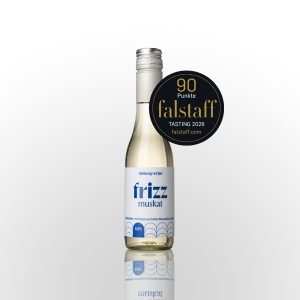
incl. VAT
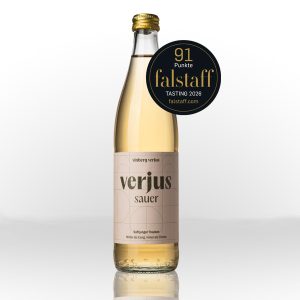
incl. VAT
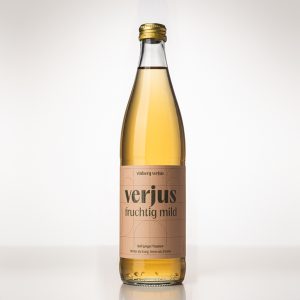
incl. VAT
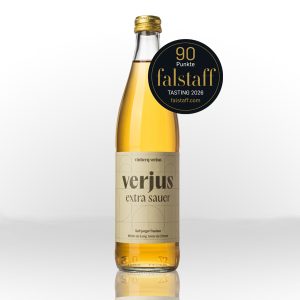
incl. VAT
We have been making verjus since 2007, and the Verjus Shop and the Vinberg brand have existed since 2012.
Today we process around 70,000 litres of verjus a year, using traditional winemaking methods and carefully selected grapes. Every batch is tested for histamine in the lab. At the Falstaff Tasting 2026, Vinberg Verjus sour scored 91 points and extra-sour 90 points.

With low histamine in mind: creamy chicken pasta with garlic, freshened with verjus instead of[Weiterlesen]
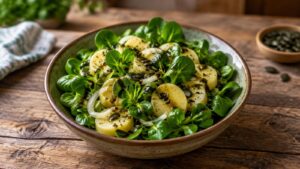
Warm potato and lamb’s lettuce salad with pumpkin seed oil and verjus instead of vinegar:[Weiterlesen]
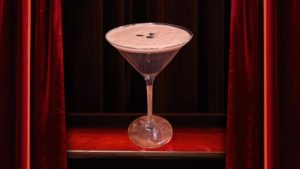
Alcohol-free: an Espresso Martini with espresso, caramel, Martini Floreale and alcohol-free coffee liqueur, shaken in[Weiterlesen]
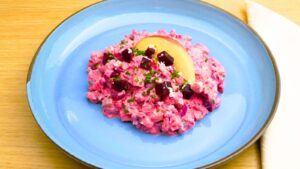
Smoked trout with apple, beetroot and horseradish in a creamy sauce with verjus: a fresh[Weiterlesen]
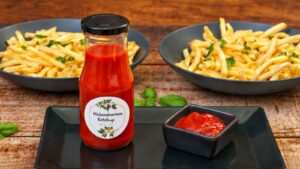
Ketchup made from roasted pointed peppers and carrot, with verjus instead of vinegar: tomato-free, vegan[Weiterlesen]

Fluffy pancakes made with rice and teff flour, ricotta and verjus, with a blueberry ricotta[Weiterlesen]

Low-histamine by design and alcohol-free: a long drink with beetroot juice, cherry juice, vanilla and[Weiterlesen]
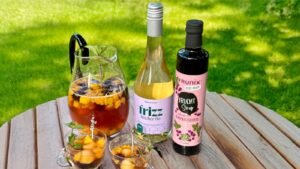
Homemade rooibos iced tea with fresh peaches, mint and Verjus fruity mild: alcohol-free, caffeine-free and[Weiterlesen]
Verjus (French for “green juice”) is pressed from unripe, green grapes before their sugar content rises, and pasteurised straight away. Because it is not fermented, it is the alcohol-free and lab-tested low-histamine alternative to vinegar or wine.
From Middle French: “vert jus” means green juice and refers to the green, unripe grapes. As early as the Middle Ages, verjus was the most important souring agent of fine cuisine in Europe.
As a mild vinegar substitute in salads, as a lemon substitute in drinks or for deglazing sauces instead of wine. It underlines the natural aroma of fresh ingredients without overpowering them.
No, drugstore and supermarket chains such as dm, Rewe, Edeka, Billa or Spar do not currently stock verjus. You can find Vinberg Verjus in selected health food shops in Austria and the complete range online at the Verjus Shop, with delivery to Austria and Germany in 3–4 days.
Under the EU Health Claims Regulation, we are not allowed to make health-related claims. As for its properties: verjus is made from unripe grapes without fermentation, is alcohol-free and lab-tested low in histamine. Many customers appreciate its gentle acidity as a mild alternative to vinegar or lemon.
Yes, but only a little, because the grapes are harvested very early. Vinberg Verjus extra-sour contains 2.0 g of sugar and less than 1 g of fructose per 100 ml, the other varieties up to 7.8 g. No sugar is added.
Finely and evenly sour, less sharp than vinegar or lemon, with a subtle aroma of green fruit and a slightly astringent finish like wine. Depending on the harvest date, zesty and sour to mild and fruity.
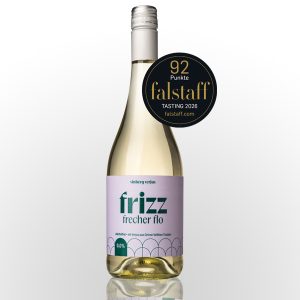
Verjus is alcohol-free. Neat, it is very sour, so it is best used like a cordial, diluted as a spritzer or as the acid in dressings and sauces. Vinberg Verjus Classic and Vinberg Verjus Frizz are ready to drink.
Vinegar is made by fermentation, during which bacteria convert alcohol into acetic acid. Verjus is pressed from unripe grapes and never fermented. It contains the grape’s fruit acids instead of acetic acid and therefore tastes milder and fruitier. Vinberg Verjus is also lab-tested low in histamine.
About 2 months once opened. If you use it less often, you can also freeze verjus in ice cube trays.