Deutsch
 Français
 Nederlands
 Polski
 Español

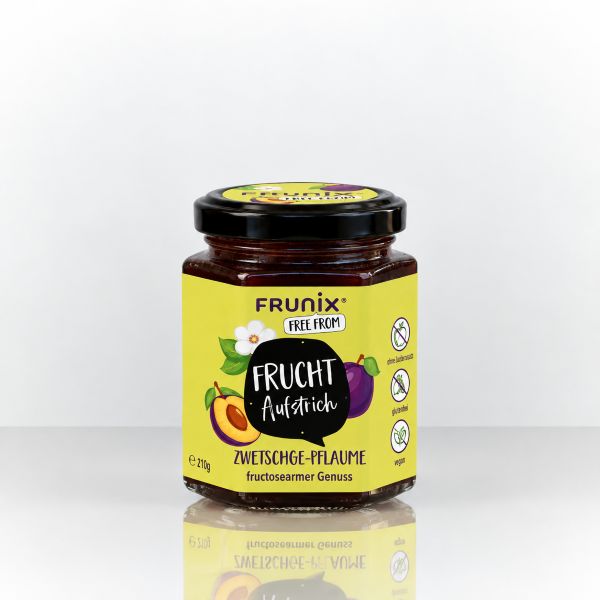
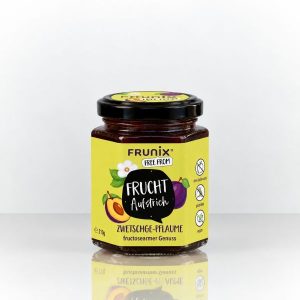

Plum Fruit Spread – for low-fructose enjoyment, lab-tested low in histamine · 210 g
6,99 € incl. VAT
Plum fruit spread for low-fructose enjoyment: under 2 g fructose per 100 g. FRUNIX sweetens this spread, made with 50% plums, with dextrose instead of table sugar. Full-bodied and slightly tart, with the typical flavour of ripe plums.
- Under 2 g fructose per 100 g, sweetened with dextrose and glucose syrup
- 50% plums: fruit purée as the first ingredient
- No added citric acid: acidified with malic acid
- No added preservatives or colours, set with apple pectin
- Vegan, gluten-free · 210 g jar · from the FRUNIX manufactory in Carinthia, Austria
In stock
Low fructose plum spread: ripe plums, sweetened with dextrose
Most fruit spreads are sweetened with table sugar, which is half fructose. The FRUNIX plum fruit spread uses dextrose and glucose syrup instead: per 100 g it contains less than 2 g of fructose. Its base is 50% plum purée, which gives it a full-bodied, slightly tart flavour. FRUNIX is a company from Bad St. Leonhard in Carinthia, Austria, that specialises in sweet foods for people with special dietary needs. According to the company, the fruit spread is made in its own manufactory in Carinthia.
Why dextrose?
Table sugar is half glucose and half fructose. Dextrose (glucose) contains no fructose at all. That is why FRUNIX sweetens this spread with dextrose and glucose syrup. The tang comes from malic acid, which, despite its name, contains no fructose; no citric acid is added. Plums naturally contain a little sorbitol: according to the manufacturer, 0.6 g per 100 g.
It is not low in sugar: with 42.4 g of sugars per 100 g it is still a sweet spread, just made with glucose instead of fructose. How well you tolerate it is individual; if in doubt, start with a small amount.
How to use it
- Breakfast: on bread, rolls and pastries
- Yoghurt and desserts: stirred into yoghurt, quark or semolina pudding
- Pancakes and Kaiserschmarrn: as a fruity filling or topping
- Baking: for cakes, tarts, Linzer slices and biscuits
- Christmas baking: as a filling for jam sandwich biscuits
Frequently asked questions
How much fructose does the spread contain?
Less than 2 g total fructose per 100 g. It is sweetened with dextrose and glucose syrup instead of table sugar.
Does it contain sorbitol?
Plums naturally contain some sorbitol. The spread contains 0.6 g per 100 g.
How long does it keep after opening?
Several weeks when kept in the fridge.
What does it go with?
Bread, pancakes, yeast dumplings, quark and yoghurt. How well individual ingredients are tolerated varies from person to person.
Fact sheet
| Brand | FRUNIX |
|---|---|
| Fruit | 50% plum purée |
| Fructose | less than 2 g per 100 g (total fructose) |
| Sugars | 42.4 g per 100 g, from dextrose, glucose syrup and fruit; polyols (sorbitol) 0.6 g |
| Properties | vegan, gluten-free, no added citric acid, no added preservatives or colours |
| Storage | once opened, keep in the fridge, where it keeps for several weeks |
| Contents | 210 g jar |
| Origin | made in the FRUNIX manufactory in Carinthia, Austria |
Ingredients & nutrition
Ingredients
50% plum purée, dextrose, glucose syrup, gelling agent: apple pectin, acid: malic acid
You may also like…