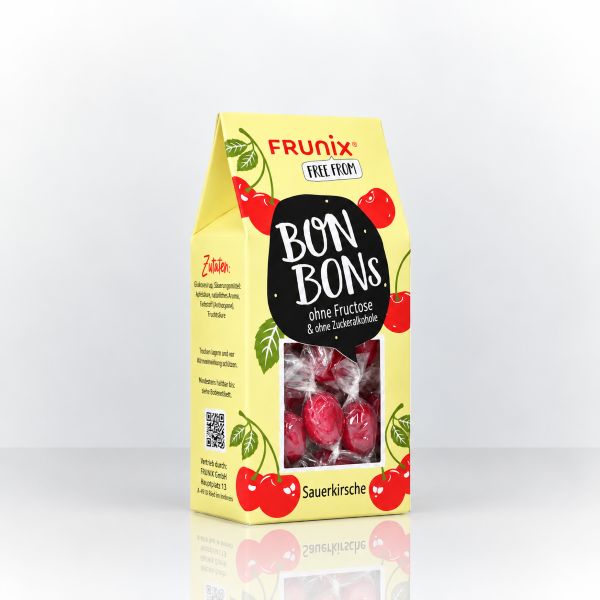

Low fructose sweets: sour cherry without sorbitol
Many “sugar-free” sweets are sweetened with sugar alcohols such as sorbitol, maltitol or isomalt, and classic sweets usually contain table sugar or glucose-fructose syrup. Many people with fructose or sorbitol intolerance avoid both. That is why FRUNIX makes these sour cherry sweets with fructose-free glucose syrup: per 100 g they contain less than 0.1 g of fructose and no sugar alcohols. They taste fruity and tart of sour cherry, are lab-tested low in histamine, vegan and gluten-free. FRUNIX is a company from Bad St. Leonhard in Carinthia, Austria, that specialises in sweet foods for people with special dietary needs. The sweets are made for FRUNIX in Germany.
Why glucose syrup?
Table sugar is half glucose and half fructose. Fructose-free glucose syrup contains no fructose at all. The tang comes from malic acid, which, despite its name, contains no fructose; no citric acid is added. The red colour comes from anthocyanins, natural plant pigments.
They are not sugar-free: with 61 g of sugars per 100 g they are still a sweet treat, just without fructose and without sugar alcohols. How well you tolerate them is individual; if in doubt, start with a small amount.
How to enjoy them
- On the go: in your handbag, rucksack or glovebox
- At the office: for a short break in between
- On long journeys: in the car, on the train or on the plane
- After a meal: as a fruity, tart finish
- As a small gift: for everyone who usually has to pass on classic sweets
Frequently asked questions
Are the sweets sugar-free?
No. They contain 61 g sugar per 100 g, but from fructose-free glucose syrup. Fructose is below 0.1 g per 100 g.
Do they contain sorbitol or other sugar alcohols?
No. They contain no sorbitol, maltitol or isomalt; polyols are 0 g.
Why malic acid instead of citric acid?
The fruity acidity comes from malic acid; no citric acid is added. Despite its name, malic acid contains no fructose.
Are they vegan?
Yes, the sweets are vegan and gluten-free. How well individual ingredients are tolerated varies from person to person.