
 Deutsch
 Français
 Nederlands
 Polski
 Español

LOW HISTAMINE EATING · FOOD CHECK
Histamine Liberators: Which Foods Can Release Histamine
What histamine liberators are, which foods are often counted among them and how to replace lemon and co. in the kitchen.
LOW HISTAMINE EATING · FOOD CHECK
What histamine liberators are, which foods are often counted among them and how to replace lemon and co. in the kitchen.
What are liberators? The list Lemon The alternative Recipes FAQ
With histamine intolerance, most people first think of foods that contain a lot of histamine themselves, such as matured cheese, salami or sauerkraut. Histamine liberators are a second group: they often contain hardly any histamine but can contribute to the body releasing its own histamine from mast cells. For the “barrel” that overflows more quickly with histamine intolerance, this can have a similar effect to histamine-rich food.
Good to know: for many foods the mechanism has not been researched in detail, and the lists are mainly based on personal experience. What one person tolerates causes symptoms in another. A food diary helps you find your own triggers.
Professional societies and the Austrian public health portal advise against blanket lists of banned foods. They recommend a three-phase approach: first eat low histamine for about two weeks, then reintroduce and test suspected foods one at a time, and finally eat long-term the way your own tolerance allows. A dietitian can support you along the way.
Histamine-rich foods
Contain a lot of histamine themselves, such as matured cheese, salami or sauerkraut.
Histamine liberators
Often contain hardly any histamine but can contribute to the body releasing its own histamine.
Individual
The lists are mainly based on personal experience. A food diary helps you find your own triggers.
| Group | Often named as a liberator | Usually better tolerated |
|---|---|---|
| Fruit | citrus fruits, strawberries, raspberries, bananas, pineapple, kiwi, papaya, pears | apple, blueberries, apricot, peach, cherry, blackberry |
| Vegetables | tomatoes | ripe red peppers, courgette, carrots |
| Pulses | lentils, beans, chickpeas | buy dried and cook fresh, not from a tin |
| Grains | wheat germ | bread, rice, potatoes, pasta |
| Nuts and cocoa | walnuts, cashews, peanuts, cocoa, chocolate | macadamia, chestnuts; buy fresh, without mould |
| Fish and seafood | seafood, shellfish (histamine-rich and sometimes named as a liberator) | freshly caught fish |
| Egg | raw egg white | egg yolk; test well-cooked egg individually |
| Additives | some additives such as glutamate, benzoic acid, sulphites (E220–E228, for example in dried fruit and wine) or azo dyes such as tartrazine (E102) | cook fresh, short ingredient lists |
| Souring | lemon juice, lime juice | Verjus from unripe grapes |
Good to know: The table is a guide for the first few weeks, not a list of banned foods. Professional societies and dietitians advise against blanket lists because the content of biogenic amines depends heavily on ripeness, storage and processing. Strictly speaking, bananas, pineapple, papaya, nuts and cocoa mainly contain other biogenic amines that compete with histamine during breakdown, which is why they are usually named together with the liberators. The sources disagree on pears: some list them as a liberator, others as well tolerated.
Alcohol is considered doubly unfavourable: it can release histamine and at the same time slow down its breakdown. Black and green tea and energy drinks are also often avoided because they can slow down the breakdown of histamine.
Lemons and limes appear on almost every list, and they are in many recipes: in dressings, marinades and drinks. You can read in detail how to replace lemon with histamine intolerance on our page Verjus for histamine intolerance.
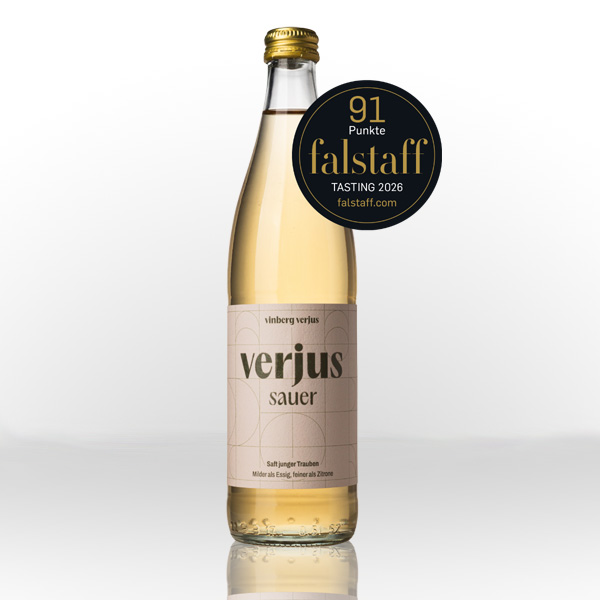
Vinberg Verjus is the juice of unripe grapes. It adds a mild, fresh acidity like lemon, but it is not a citrus fruit and it is lab-tested low in histamine.
With low histamine in mind: creamy chicken pasta with garlic, freshened with verjus instead of[Weiterlesen]
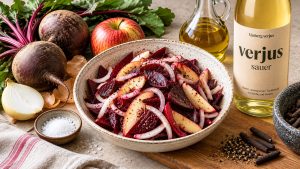
Low-histamine and vegan: beetroot and apple salad with verjus instead of vinegar and pippali pepper.
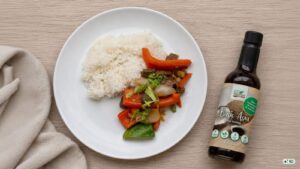
Seared beef with peppers and onion, seasoned with Basic Asia instead of soy sauce: quick[Weiterlesen]
Histamine liberators are foods and substances that contain little histamine themselves but can encourage the release of histamine from mast cells in the body. How strong this effect is for foods has not been conclusively clarified by science.
Commonly named are citrus fruits, strawberries, raspberries, bananas, pineapple, kiwi, papaya and pears, tomatoes, pulses such as lentils, beans and chickpeas, nuts such as walnuts and cashews, cocoa and chocolate, wheat germ, raw egg white and some additives. Seafood is mainly histamine-rich and is sometimes also named as a liberator. Which of these you do not tolerate yourself varies from person to person.
Histamine-rich foods such as matured cheese, salami or sauerkraut already contain a lot of histamine. Histamine liberators contain little themselves but can release the body’s own histamine. With histamine intolerance, both groups are often avoided.
Lemons and other citrus fruits appear among the histamine liberators on most lists, and so does lemon juice. For adding acidity, lemon juice can easily be replaced with verjus made from unripe grapes.
Verjus, the juice of unripe grapes, adds a mild, fresh acidity like lemon but is not a citrus fruit. Vinberg Verjus is lab-tested low in histamine and can be used 1:1 like lemon juice, for dressings, marinades and drinks.
Which foods are usually well tolerated, and which are often avoided? You will find the full overview in our low histamine food list with traffic-light table, plus more food checks: Soy sauce and histamine and Peppers, paprika and tomatoes with histamine intolerance.
To the food list Soy sauce Peppers and tomatoesSources and further reading
Tolerance varies from person to person. This page does not replace medical or dietetic advice.