
 Deutsch
 Français
 Nederlands
 Polski
 Español

LOW HISTAMINE EATING · FOOD CHECK
Peppers, Paprika and Tomatoes with Histamine Intolerance: What Works?
Why ripe bell peppers are usually well tolerated but tomatoes often are not, and what to use instead of tomato sauce, tomato paste and ketchup.
LOW HISTAMINE EATING · FOOD CHECK
Why ripe bell peppers are usually well tolerated but tomatoes often are not, and what to use instead of tomato sauce, tomato paste and ketchup.
Peppers: usually yes
Ripe red, yellow and orange peppers are considered fairly well tolerated. Take care with green peppers and hot varieties.
Tomatoes: rather not
Tomatoes contain histamine and are considered a histamine liberator. Tomato paste, sun-dried tomatoes and ketchup are concentrated.
Peppers Tomatoes Overview The alternative Recipes FAQ
Fresh bell peppers contain hardly any histamine. Ripe red, yellow and orange peppers are considered fairly well tolerated on many tolerance lists and are therefore an important basis of low histamine cooking: raw as a snack, fried, roasted or puréed into a sauce. The leaflets from the Technical University of Munich and Ordensklinikum Linz also list peppers among the well tolerated vegetables.
Many people are more careful with green peppers, which are harvested unripe, and with hot varieties: chilli and hot paprika appear among the foods more often avoided on many lists. Sweet paprika powder made from mild, ripe red peppers, on the other hand, is usually considered well tolerated; smoked paprika less so. If you do not tolerate the skin well, cook the peppers or peel them after roasting.
Tomatoes contain histamine themselves and are also considered a histamine liberator, meaning they release the body’s own histamine. The riper and the more processed they are, the more likely they are to be avoided: passata, tomato paste, sun-dried tomatoes and ketchup are concentrated, and ketchup usually contains vinegar as well.
| Food | Assessment | Note |
|---|---|---|
| Red, yellow and orange peppers | ● usually well tolerated | best fresh and ripe |
| Green peppers | ● tolerated differently | harvested unripe, test carefully |
| Sweet paprika powder | ● usually well tolerated | made from mild, ripe red peppers, not hot |
| Chilli, hot paprika powder | ● often avoided | contains capsaicin, which can irritate the mucous membranes |
| Smoked paprika | ● rather avoided | smoked foods appear among the foods more often avoided on many lists |
| Fresh tomatoes | ● often avoided | contain histamine, considered a liberator |
| Passata, tomato paste, sun-dried tomatoes | ● often avoided | concentrated |
| Ketchup | ● often avoided | tomato plus vinegar |
| Basic Paprika | ● lab-tested low in histamine | pointed red peppers, without tomatoes or vinegar |
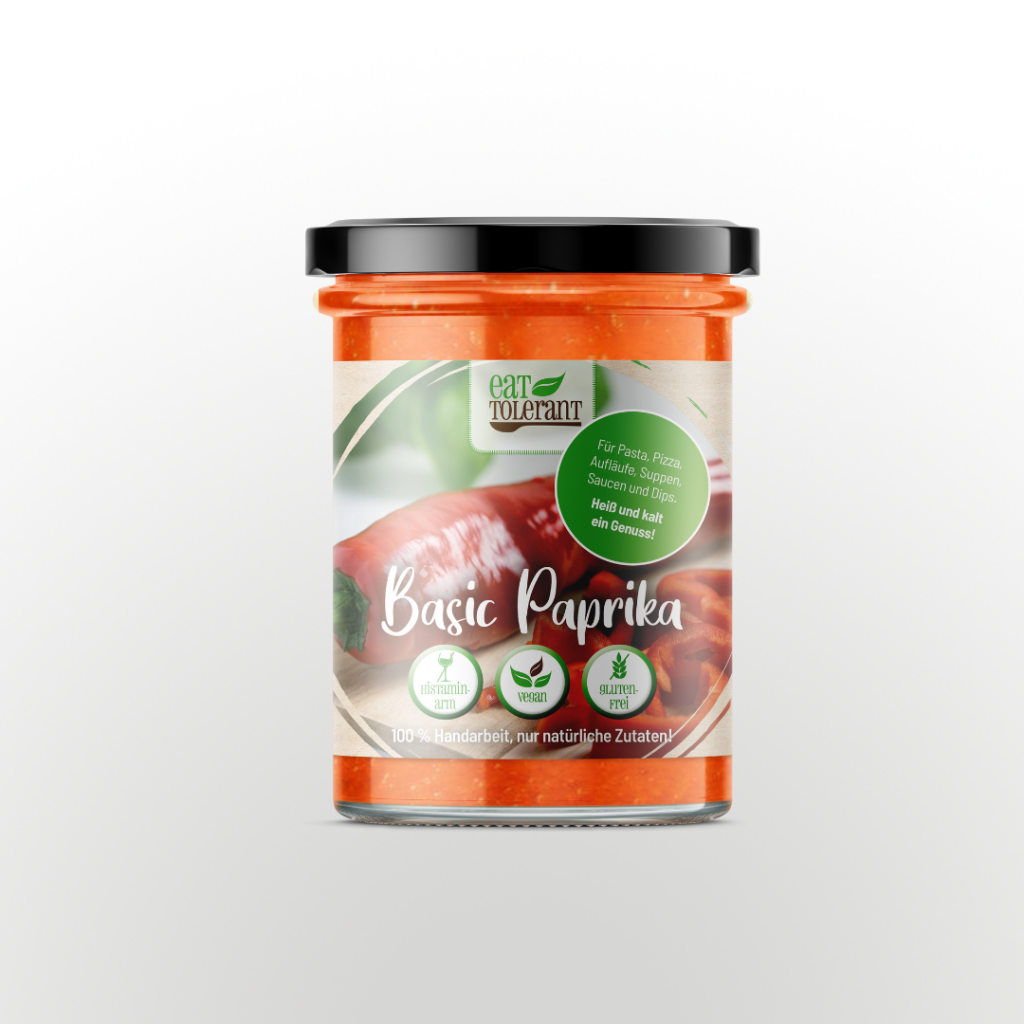
Basic Paprika by Eat Tolerant is a sauce made from hand-cut pointed red peppers, with mild verjus instead of vinegar. It contains no tomatoes, no vinegar and no citric acid and is lab-tested low in histamine.
mit Verjus und Basic Paprika – histaminarm und glutenfrei Rezept von Jessica @eat_tolerant

Gluten-free pizza with a potato base, Basic Paprika instead of tomato sauce, pumpkin and buffalo[Weiterlesen]
Chicken and peppers in a creamy sauce made with Basic Paprika and cream: a quick[Weiterlesen]
Usually yes. Fresh, ripe bell peppers in red, yellow or orange contain hardly any histamine and are considered fairly well tolerated on many tolerance lists. Green, unripe peppers and hot varieties are more often avoided.
Tolerance varies from person to person. Some people react to green, unripe peppers or hot varieties, or do not tolerate the skin well. Try ripe red peppers in small amounts, cooked or peeled, and note how you feel.
Tomatoes contain histamine themselves and are also considered a histamine liberator. The riper and the more processed they are, for example as tomato paste, sun-dried tomatoes or ketchup, the more likely they are to be avoided.
A sauce made from peppers works well. Basic Paprika by Eat Tolerant is a pointed red pepper sauce without tomatoes, with mild verjus instead of vinegar, lab-tested low in histamine and used 1:1 like passata.
Classic ketchup made from tomatoes and vinegar is often avoided with histamine intolerance. An alternative is homemade pepper-based ketchup, for example our recipe for low histamine ketchup with Basic Paprika and verjus.
Yes. Basic Paprika by Eat Tolerant contains no tomatoes, no vinegar and no citric acid and is lab-tested low in histamine. How well you tolerate it still varies from person to person.
Which foods are usually well tolerated, and which are often avoided? You will find the full overview in our low histamine food list with traffic-light table, plus more food checks: Soy sauce and histamine and Histamine liberators.
To the food list Soy sauce and histamineSources and further reading
Tolerance varies from person to person. This page does not replace medical or dietetic advice.