
 Deutsch
 Français
 Nederlands
 Polski
 Español

LOW HISTAMINE EATING · FOOD CHECK
Soy Sauce and Histamine: Is Soy Sauce High in Histamine?
Why soy sauce is often avoided with histamine intolerance, what is in tamari and Maggi, and what to season with instead.
LOW HISTAMINE EATING · FOOD CHECK
Why soy sauce is often avoided with histamine intolerance, what is in tamari and Maggi, and what to season with instead.
Why a problem? Overview The alternative Recipes FAQ
Soy sauce is made by maturing soybeans, and usually wheat, with salt and mould cultures for months. During this fermentation, microorganisms break down protein, and histamine is produced. The longer and warmer the maturation, the more histamine. The content varies greatly from bottle to bottle, which makes soy sauce hard to dose.
On top of that, many people with histamine intolerance react to small amounts. A dash of soy sauce in the pan can be enough to make the “barrel” overflow.
Months of fermentation
During maturation, microorganisms break down protein and histamine is produced.
Content varies widely
The longer and warmer the maturation, the more histamine. It differs from bottle to bottle.
Small amounts are enough
Even a dash of soy sauce in the pan can be too much.
| Seasoning sauce | Assessment | Why |
|---|---|---|
| Soy sauce, traditionally brewed | ● often avoided | Months of fermentation, histamine content varies greatly |
| Tamari | ● often avoided | Also a fermented soy sauce, just with little or no wheat |
| Miso, fish sauce | ● often avoided | Fermented and matured for a long time |
| Seasoning such as Maggi | ● often avoided | Made from hydrolysed protein and yeast extract |
| Basic Asia coconut aminos | ● lab-tested low in histamine | Not fermented, no soy or wheat, just three ingredients |
Tofu and other soy products also appear among the foods more often avoided on many lists, for example in the leaflet from the Technical University of Munich. Fermented soy products such as miso or tempeh are considered particularly rich in biogenic amines.
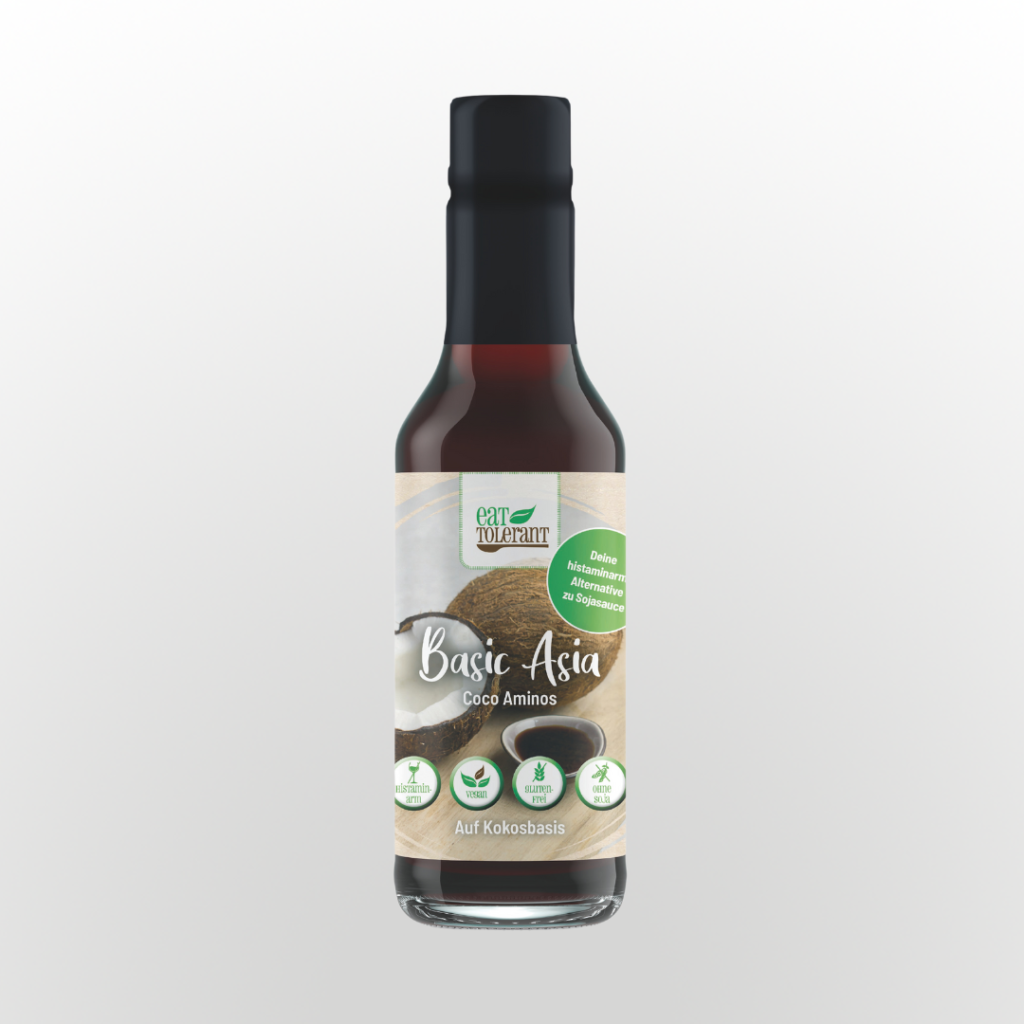
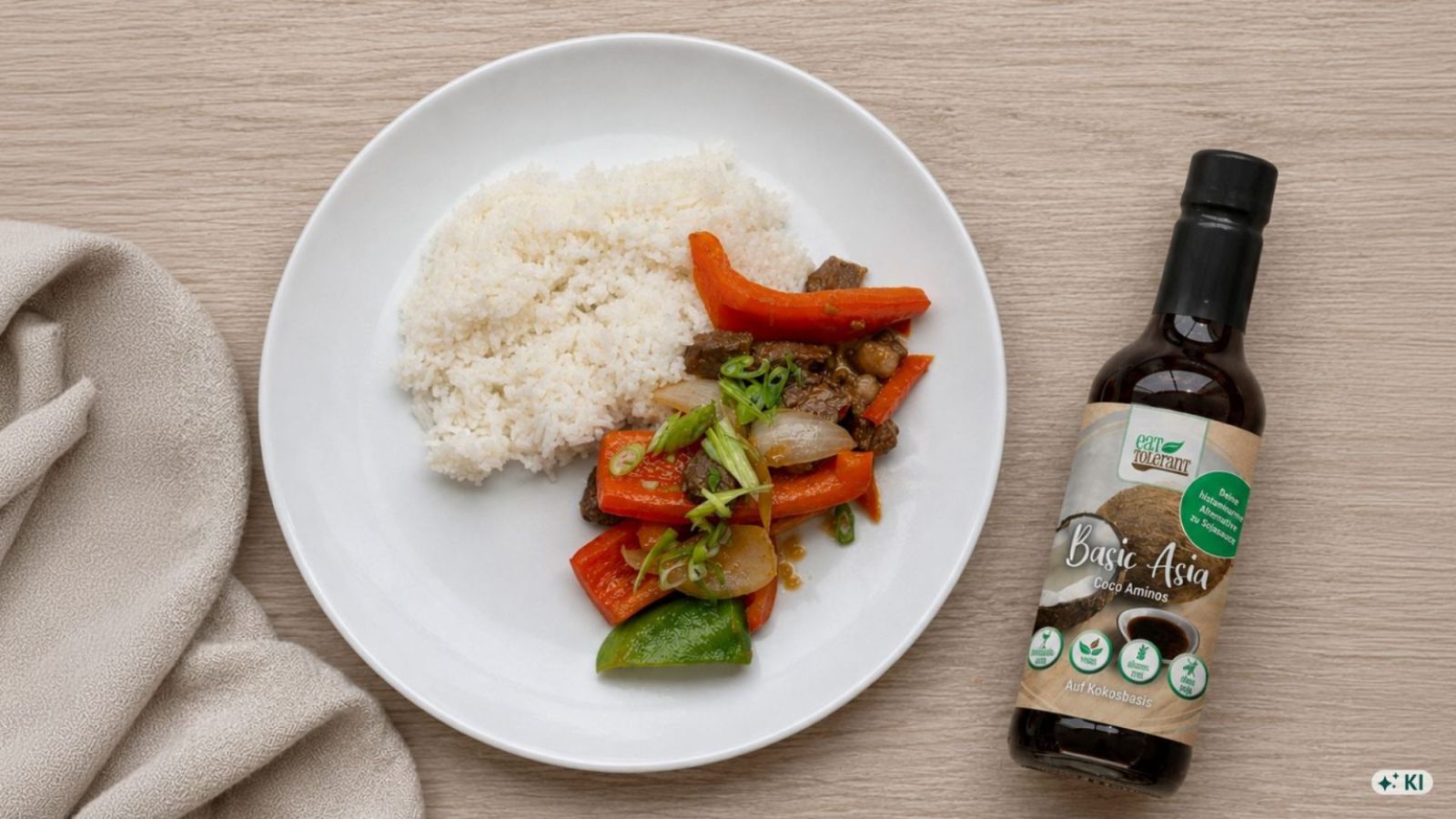
Basic Asia coconut aminos by Eat Tolerant is made from just coconut blossom nectar, water and sea salt. The seasoning sauce is not fermented, contains neither soy nor wheat and is lab-tested low in histamine.
Seared beef with peppers and onion, seasoned with Basic Asia instead of soy sauce: quick[Weiterlesen]
Chicken and peppers in a creamy sauce made with Basic Paprika and cream: a quick[Weiterlesen]
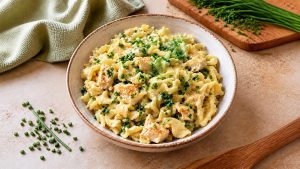
With low histamine in mind: creamy chicken pasta with garlic, freshened with verjus instead of[Weiterlesen]
Traditionally brewed soy sauce matures for months. This fermentation produces histamine, and the content varies greatly depending on how it is made. That is why soy sauce is often avoided with histamine intolerance.
A good choice is an unfermented seasoning sauce such as Basic Asia coconut aminos, made from coconut blossom nectar, water and sea salt. It is used 1:1 like soy sauce and is lab-tested low in histamine.
Seasonings such as Maggi are usually made from hydrolysed protein and yeast extract. That is why many tolerance lists also include them among the foods more often avoided.
No. Tamari is a soy sauce with little or no wheat, but it is fermented in the same way. This makes no difference to the histamine content.
Yes. Basic Asia coconut aminos by Eat Tolerant is not fermented, contains neither soy nor wheat and is lab-tested low in histamine. How well you tolerate it still varies from person to person.
Which foods are usually well tolerated, and which are often avoided? You will find the full overview in our low histamine food list with traffic-light table, plus more food checks: Paprika and tomatoes with histamine intolerance and Histamine liberators.
To the food listSources and further reading
Tolerance varies from person to person. This page does not replace medical or dietetic advice.